How to Choose Hiking Socks: Materials and Fit Guide

Did you know that ill-fitting socks cause more than 70% of hiking blisters? I learned this the hard way during a 15 km hike when my cotton socks turned my feet into a painful, blistered mess. The right hiking socks can make or break your outdoor adventure!
Choosing the perfect hiking socks isn’t just about grabbing any thick pair from your drawer. It’s a science that involves understanding materials, fit, cushioning, and how your socks work with your boots. Regardless of your hiking experience, your feet deserve the best protection and comfort.
In this comprehensive guide, I’ll walk you through everything you need to know about selecting hiking socks that will keep your feet happy, dry, and blister-free on every adventure!
Why Hiking Socks Matter for Trail Comfort
Look, I used to think socks were just socks. Like, how different could they really be, right? Then I spent an entire weekend limping around Tatra Mountains with blisters the size of quarters on both heels, and let me tell you—I became a believer real fast!
Here’s the thing most beginners don’t realize: your hiking socks are actually doing way more work than your expensive boots. They’re managing moisture, preventing friction, and creating this crucial buffer between your feet and your footwear. When you skimp on quality hiking socks, you’re basically setting yourself up for a miserable time on the trail.
The blister situation is no joke. Studies show that poor sock choice causes the majority of foot problems for hikers, and I’ve seen it play out dozens of times. Your regular cotton athletic socks might feel fine around the house, but take them on a 20 km hike? They’ll trap sweat against your skin, create hot spots, and turn your feet into a disaster zone. Proper hiking socks use moisture-wicking materials that pull sweat away from your skin and help it evaporate through your boots.
But it’s not just about blister prevention. Good hiking socks actually improve how your boots fit on your feet. They fill in gaps, reduce pressure points, and keep your foot from sliding around inside your boot—especially on those steep downhill sections where your toes want to jam forward.
And here’s something that surprised me: the right socks can genuinely extend your hiking range. When your feet stay comfortable, dry, and supported, you’re not stopping every hour to adjust things or deal with pain. You can focus on the trail, the views, and actually enjoying your adventure instead of obsessing over your aching feet.
I know quality hiking socks cost more than your typical drugstore pack. But trust me, spending $20-30 on a good pair beats spending your entire hike wishing you were back at the trailhead!
Hiking Sock Materials: What Works Best
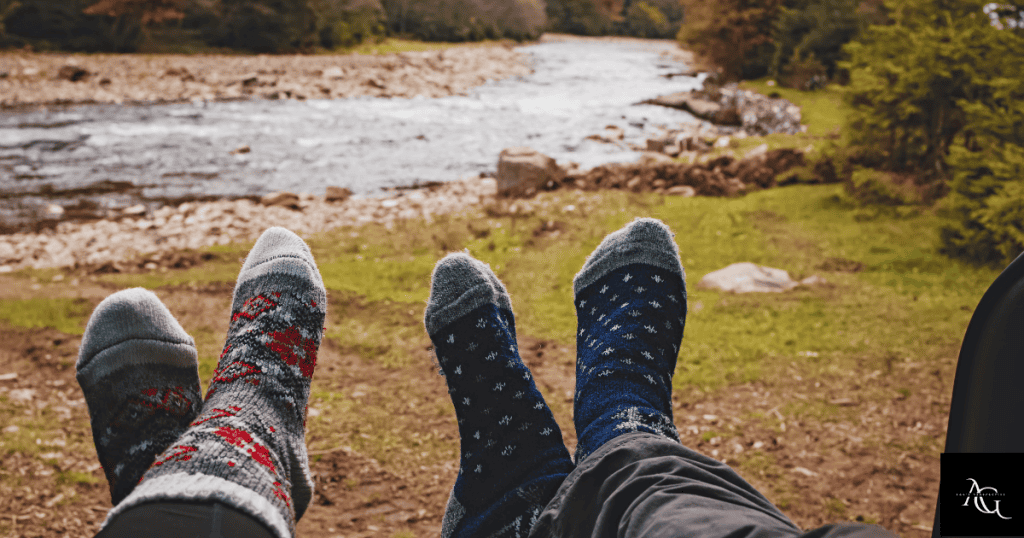
Alright, so after my cotton sock disaster, I went down this rabbit hole trying to figure out what materials actually work for hiking. And honestly? The science behind hiking sock fabrics is way more interesting than I expected!
Merino Wool:
Merino wool is basically the gold standard, and there’s good reason for that. This stuff comes from merino sheep and has these incredible natural properties that synthetic materials are still trying to replicate.
Here’s why merino wool rocks:
- Temperature regulation like nothing else – it keeps your feet warm when it’s cold and cool when it’s hot
- Serious odor resistance – I’ve worn the same merino socks for three days straight on backpacking trips, and they don’t smell nearly as bad as you’d think
- Moisture-wicking that actually works – even when the wool gets damp, it still insulates and doesn’t feel gross against your skin
I remember crossing a stream in my merino socks and being shocked that my feet didn’t feel swampy afterward.
Synthetic Fibers:
Now, synthetic fibers like polyester and nylon have their place too. These materials are incredibly durable and dry faster than natural fibers.
If you’re hiking in really wet conditions or doing multiple water crossings, synthetics might actually be your best bet. They’re also usually cheaper than merino wool, which matters when you’re building out your gear collection on a budget.
Blended Fabrics:
Most high-quality hiking socks use blended fabrics, and that’s honestly where the magic happens. You’ll see combinations like 60% merino wool, 37% nylon, and 3% spandex.
Here’s what each material brings to the party:
- Merino gives you comfort and temperature regulation
- Nylon adds durability and faster drying
- Spandex keeps everything fitted properly so the sock doesn’t bunch up
These blends give you the best of both worlds.
Cotton:
Here’s what you need to avoid at all costs: cotton. I can’t stress this enough.
Cotton absorbs moisture and holds onto it. This creates the perfect environment for blisters and hot spots. There’s an old saying in the hiking community—”cotton kills”—and while that’s more about hypothermia in wet conditions, it absolutely applies to your feet too.
Cotton has zero place in your hiking sock drawer. Period.
Other Materials Worth Mentioning
Some folks are getting into bamboo socks and other eco-friendly alternatives, which is cool. Bamboo is naturally antimicrobial and pretty soft, but it’s not as durable as merino or synthetics in my experience.
If sustainability is important to you, look for brands using recycled materials or responsible wool sourcing instead.
Seasonal Considerations
Your material choice should shift with the seasons.
In summer, I lean toward socks with higher synthetic content because they dry so fast.
Winter hiking? I’m reaching for thicker merino blends every time for that insulation factor.
Spring and fall are when those versatile midweight blends really shine.
The bottom line is this: invest in either quality merino wool or good synthetic blends. Your feet will thank you on every single hike!
Getting the Perfect Fit: Size, Height, and Construction
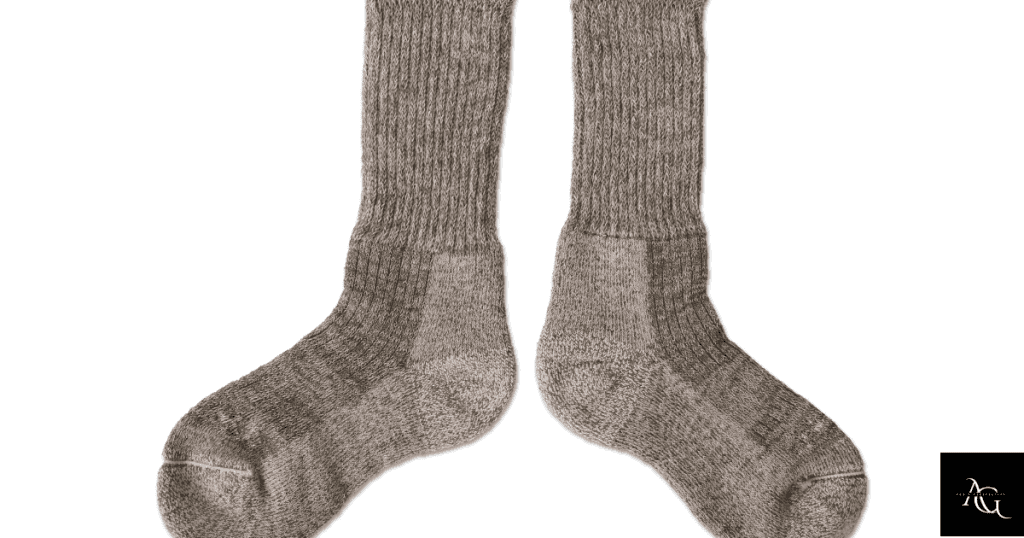
I cannot tell you how many times I’ve watched people grab hiking socks in their “regular” shoe size and then wonder why they’re dealing with blisters. Sizing hiking socks isn’t the same as sizing regular socks, and getting this wrong will mess up your entire day on the trail!
How to Actually Size Your Hiking Socks
First things first: check the brand’s sizing chart every single time. Seriously, a medium in Darn Tough isn’t necessarily the same as a medium in Smartwool.
Most hiking sock brands use shoe size ranges, like small (women’s 4-6.5), medium (women’s 7-9.5), and so on. If you’re between sizes, I usually go with the larger size. A slightly looser sock is way better than one that’s too tight and restricts circulation.
Here’s something I learned the hard way: try your socks on with your actual hiking boots before hitting the trail. Your boots should still fit comfortably with the sock thickness you’ve chosen. If things feel cramped, you might need thinner socks or you need to size up your boots.
Sock Height: More Than Just a Style Choice
The height of your hiking socks actually matters for protection and comfort. You’ve got three main options here.
Crew-length socks are my go-to for most hiking. They come up to mid-calf and provide maximum protection from your boot cuffs, debris, and scratchy vegetation. If you’re wearing high-top hiking boots, crew socks are basically essential to prevent rubbing.
Quarter-length socks hit just above your ankle. These work great with low-cut trail runners or approach shoes. I use these for summer day hikes when I want more breathability.
Ankle or no-show socks are the shortest option. Honestly? I rarely use these for actual hiking because they don’t offer much protection. But some ultralight hikers swear by them in warm weather.
Construction Features That Make a Difference
The way a sock is constructed determines whether it stays put or becomes a bunched-up nightmare. Look for elastic support zones around the arch and ankle—these keep the sock from sliding down into your boot.
Y-heel construction is this design feature where the heel is shaped like a “Y” instead of just a flat seam. It cups your heel better and prevents the sock from twisting around your foot. Once I started paying attention to this, I noticed a huge difference in all-day comfort.
Seamless toe construction is non-negotiable for me now. That little seam across your toes in regular socks? It creates a friction point that can cause blisters on long hikes.
Gender-specific designs do exist, and they’re usually about foot shape differences rather than just sizing. Women’s socks often have a narrower heel and different proportions. But honestly, if a men’s or women’s sock fits you well, that’s what matters most.
The perfect fit means your sock stays in place, doesn’t create pressure points, and works seamlessly with your footwear!
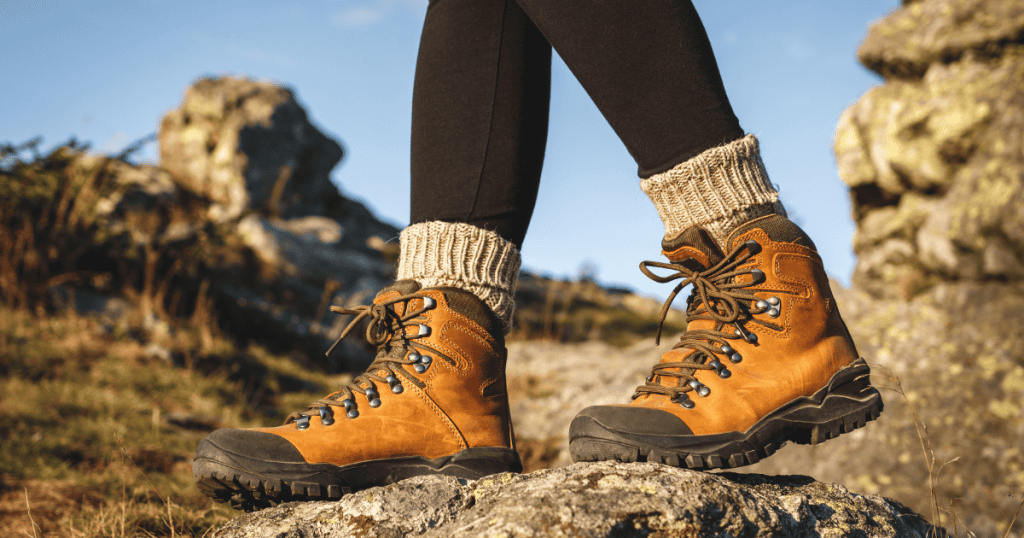
Cushioning Levels: Finding Your Comfort Zone
One of the biggest surprises when I started researching hiking socks was learning that more cushioning doesn’t automatically mean more comfort. In fact, wearing socks that are too thick for your boots can actually create problems!
Lightweight Socks:
Lightweight socks are thin and minimalist, usually with cushioning only in high-impact zones like the heel and ball of your foot. These are perfect for warm weather hiking when you want maximum breathability.
I love lightweight socks for fast-paced day hikes and trail running. Your feet stay cooler, and there’s less bulk in your shoes. The trade-off? You’re getting less padding and insulation.
If you’re wearing trail runners or approach shoes with a snug fit, lightweight socks are probably your best bet. Anything thicker might make your shoes feel too tight.
Midweight Cushioning:
Midweight socks are the most versatile choice for the average hiker. They’ve got moderate cushioning throughout the foot with extra padding in key pressure points.
This is what I reach for on most three-season hikes. They provide solid comfort without adding too much bulk, and they work well with both hiking boots and trail shoes. The cushioning gives you enough protection for all-day wear without making your boots feel cramped.
Spring and fall hiking? Midweight is where it’s at.
Heavyweight Socks:
Heavyweight socks are the thick, plush option with cushioning basically everywhere. These are what you want for cold weather hiking, snowshoeing, or when you’re carrying a heavy backpack.
I learned to appreciate heavyweight socks on my first winter camping trip. The extra insulation kept my feet warm in freezing temperatures, and the padding helped absorb impact when I was carrying 40+ pounds on my back.
The downside is that heavyweight socks take up more room in your boots. Make sure you’ve tried them on with your boots before a big trip, or you might end up with restricted circulation.
Matching Cushioning to Your Needs
Here’s my rule of thumb: if your boots fit perfectly with thin socks, stick with lightweight. If there’s a bit of extra room, midweight cushioning can help fill that space and improve fit.
Your hiking style matters too. Fast and light hikers usually prefer less cushioning. Backpackers carrying heavy loads benefit from more padding under their feet.
The key is finding that sweet spot where you’ve got enough cushioning for comfort without compromising your boot fit!
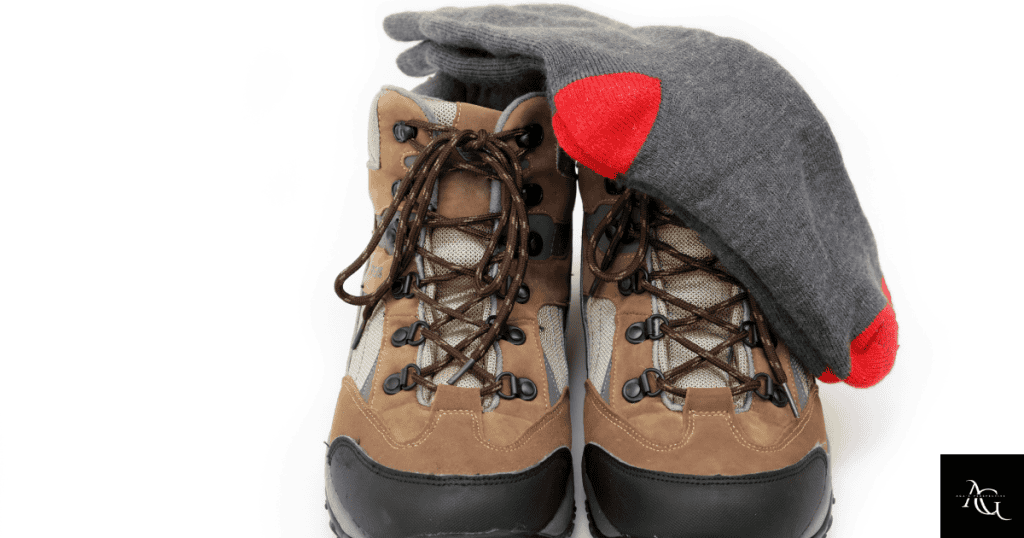
Essential Features in Quality Hiking Socks
Once you understand materials and cushioning, it’s time to look at the specific features that separate mediocre hiking socks from truly great ones. These details might seem small, but they make a massive difference when you’re miles into a trail!
Reinforced Heels and Toes:
The heel and toe areas take the most abuse during hiking. They’re constantly rubbing against your boots and bearing the brunt of your weight with every step.
Quality hiking socks have extra material woven into these high-wear zones. I’ve had cheap socks develop holes in the heel after just a few hikes, while my reinforced pairs are still going strong after hundreds of miles. It’s worth paying more upfront for this durability.
Moisture-Wicking Technology:
This is honestly the most important feature for blister prevention. Moisture-wicking means the sock fabric actively pulls sweat away from your skin and moves it to the outer surface where it can evaporate.
Without this technology, moisture sits on your skin and creates friction. With it, your feet stay drier and significantly more comfortable. Every quality hiking sock should have this built in, whether it’s merino wool doing it naturally or synthetic fibers engineered for the job.
Antimicrobial Treatments:
If you’re planning overnight trips or multi-day hikes, antimicrobial treatments are a game-changer. These treatments inhibit bacteria growth, which is what causes that awful sock smell.
I’ve worn treated socks for three days straight without them getting unbearable. My untreated socks? They’d be offensive by day two. This feature isn’t essential for day hiking, but it’s clutch for backpacking trips.
Ventilation Panels:
Some hiking socks include mesh panels or thinner knit zones on the top of the foot. These ventilation zones allow heat to escape and air to circulate.
I really notice this feature during summer hikes. My feet don’t overheat as quickly, and the breathability makes a noticeable difference in overall comfort.
Compression Bands and Arch Support
Elastic bands around the arch and ankle aren’t just about keeping your sock in place. They provide gentle compression that reduces foot fatigue and improves stability.
The arch support especially helps on long hikes. It’s like having a little extra structure built into your sock that supports your foot’s natural shape.
When you’re shopping for hiking socks, make sure you’re getting these features—not just paying for a fancy brand name!
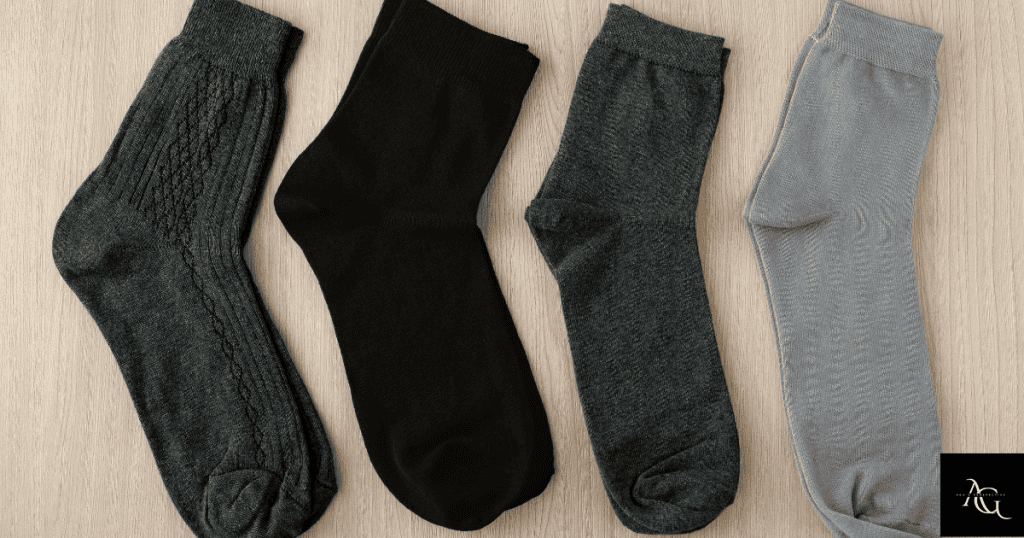
Caring for Your Hiking Socks
You just dropped $25 on a pair of quality hiking socks, so let’s make sure they last! Proper care can seriously extend the lifespan of your socks and keep them performing at their best.
Washing Your Hiking Socks the Right Way
- Turn your socks inside out before washing. This protects the outer fibers and helps release dirt and oils trapped against your skin.
- Use cool or warm water—never hot. Hot water breaks down elastic fibers and can cause merino wool to shrink. I learned this the expensive way when I accidentally shrunk my favorite pair into kid-sized socks!
- Skip the fabric softener completely. It coats the fibers and destroys their moisture-wicking abilities. Same goes for bleach, which weakens the material and ruins the antimicrobial treatments.
Drying: Patience Is Key
Air drying is always your best bet for hiking socks. Hang them up or lay them flat, and they’ll be ready for your next adventure.
If you must use a dryer, use the lowest heat setting possible. High heat damages elastic, shrinks wool, and shortens the overall lifespan of your socks. I only machine dry my synthetics when I’m in a hurry, and even then I use low heat.
When to Replace Your Socks
Even the best hiking socks don’t last forever. When you start seeing thin spots, holes, or the elastic gets stretched out and won’t stay up, it’s time to retire them.
Many premium brands like Darn Tough offer lifetime warranties. If your socks develop holes from normal wear, you can actually send them back for replacement. Keep your receipt and take advantage of these programs!
Proper care means your quality hiking socks can last for years instead of months. It’s worth the extra effort!
Common Mistakes to Avoid
I’ve made basically every hiking sock mistake in the book, so let me save you some pain and frustration! These are the most common errors I see hikers making with their socks.
Breaking In New Socks on Big Hikes
Never, and I mean never, wear brand-new socks on a long or important hike. Even quality hiking socks need to be tested first.
I wore fresh-out-of-the-package socks on a 15 km hike once and got blisters in weird spots I’d never had problems before. Test new socks on short walks or easy trails first to make sure they work with your feet and boots.
Choosing Based on Thickness Alone
Thicker doesn’t automatically mean better! I used to think heavyweight socks were always the superior choice until I wore them in summer and my feet were absolutely miserable.
Match your sock weight to the weather, your activity level, and how your boots fit. Sometimes a lightweight sock is exactly what you need.
Ignoring the Weather and Conditions
Your sock choice should change based on conditions. Wearing thick merino wool socks on a hot July hike is asking for sweaty, uncomfortable feet.
Similarly, lightweight socks in freezing temperatures won’t give you the insulation you need. Pay attention to the forecast and plan accordingly!
Not Carrying Spare Socks
On multi-day trips, always pack at least one extra pair of socks. If your feet get wet from a stream crossing or unexpected rain, having dry socks to change into is absolutely clutch.
I keep a spare pair in a waterproof bag at the top of my pack. It’s a small weight penalty for huge comfort insurance.
Assuming All Hiking Socks Perform Equally
Not all hiking socks are created equal, even at similar price points. Some brands fit narrow feet better, others are more durable, and quality varies significantly.
Read reviews, ask experienced hikers, and don’t be afraid to try different brands until you find what works for your feet!
Conclusion:
Choosing the right hiking socks is one of the simplest yet most impactful decisions you can make for your trail comfort and safety. From understanding the superiority of merino wool and synthetic blends over cotton, to finding the perfect cushioning level and fit for your specific hiking style, every detail matters when it comes to protecting your feet!
Remember, the best hiking socks are those that match your unique needs—whether that’s lightweight breathability for summer day hikes or heavyweight insulation for winter backpacking trips.
Your feet carry you through every mile on the trail, so give them the support they deserve! Start by assessing your current hiking conditions and boots, then choose socks that align with those specific needs. Happy trails, and may your feet stay comfortable, dry, and blister-free on every adventure ahead!